Thursday, September 28, 2006


Monday, September 18, 2006
Pope offends huge group of people. Imagine my surprise.

Pope Benedict has consistently referred to homosexuals as being evil, immoral and 'objectively disordered' .
He has claimed that gay men and women are incapable of relating to other human beings and couldn't possible understand, give or receive real love.
Worst of all, he has consistently sought to deflect his Church's conspiratorial role in the devastating child sex abuse scandal to gay men, inferring that homosexuality and paedophilia are one and the same.
Where was - is - the condemnation and round-the-clock news coverage of these transgressions?
Will the Holy Father issue an apology to gay people now as well?
Or perhaps he'd care to 'clarify' his remarks?
Wednesday, September 13, 2006
Source of Internal Conflict

Micheal McDowell is now the Deputy Overlord of the Land.
But just as I was rummaging around for my passport, I remembered that the PDs are threatening to pistol whip into some shape the most incompetent, inefficient, unreliable and unprofessional public transport service in Europe. I'm referring, of course, to Dublin Bus.
My enemy's enemy my friend?
Monday, September 11, 2006

Tuesday, August 29, 2006

Saturday, August 12, 2006
Today's Irish Times
The Essential Dave Allen, Edited by Graham McCann, Hodder, £8.99
The son of a former general manager of this very newspaper, the late, Dublin-born Allen himself worked as a journalist and as a Butlin's Redcoat before making his mark as a hugely popular comic, first in Australia, then on BBC and ITV. This is a collection of his greatest material - jokes, anecdotes, monologues, lyrics, poems and sketches - divided into thematic sections, ranging from childhood to growing up to the afterlife. Allen's artful, observational humour was often merciless - particularly regarding Catholicism - but was so sharp and classy that people could forgive him anything. This is a joy to read and there is, of course, something extra for Irish readers, who will immediately identify with the domestic cultural peculiarities that Allen both mocks and celebrates with almost poignant affection. Declan Cashin
The son of a former general manager of this very newspaper, the late, Dublin-born Allen himself worked as a journalist and as a Butlin's Redcoat before making his mark as a hugely popular comic, first in Australia, then on BBC and ITV. This is a collection of his greatest material - jokes, anecdotes, monologues, lyrics, poems and sketches - divided into thematic sections, ranging from childhood to growing up to the afterlife. Allen's artful, observational humour was often merciless - particularly regarding Catholicism - but was so sharp and classy that people could forgive him anything. This is a joy to read and there is, of course, something extra for Irish readers, who will immediately identify with the domestic cultural peculiarities that Allen both mocks and celebrates with almost poignant affection. Declan Cashin
Friday, August 11, 2006
Reviews

You can read new movie reviews - amongst other things - by clicking on the links below.
The Notorious Bettie Page
Lady in the Water
Thursday, July 13, 2006
Just My Look

What do I think about Lindsay Lohan's new movie, Just My Luck? It's a question that has troubled many great minds, but you can now found out by clicking here.

The Dubliner's annual Best of Dublin list is out now in the August edition of the magazine. It's a great read, featuring contributions from such fugures as David Norris, Roisin Ingle, Declan Buckley, Abie Philbin Bowman, Podge and Rodge and, er, me. Look it up, check it out, tá se ann!
Saturday, July 08, 2006
From today's Irish Times
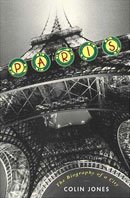
Paris: Biography of a City by Colin Jones, Penguin, £10.99
The recent protests in Paris over youth job contracts were just following a long tradition of social and political unrest in the city, as can be seen from Colin Jones's award-winning tour through the history of the French capital. Jones's vibrant and intimately-
detailed text traces the political, cultural and infrastructural development of the city in roughly chronological fashion. The author takes us from Paris's origins as a Roman capital right through to the election of Chirac, before ending with his thoughts on the future of the city. The narrative is interspersed with sidebars that home in on selected figures, places and phenomena from the city's 2,000-year heritage. Jones consistently draws our attention to the emergence of ideas, movements and customs we associate with the City of Light, weaving them into the history of both France and the wider world, upon which Paris had a profound and lasting influence. Declan Cashin
Wednesday, June 21, 2006
We're men, we're men in tights...
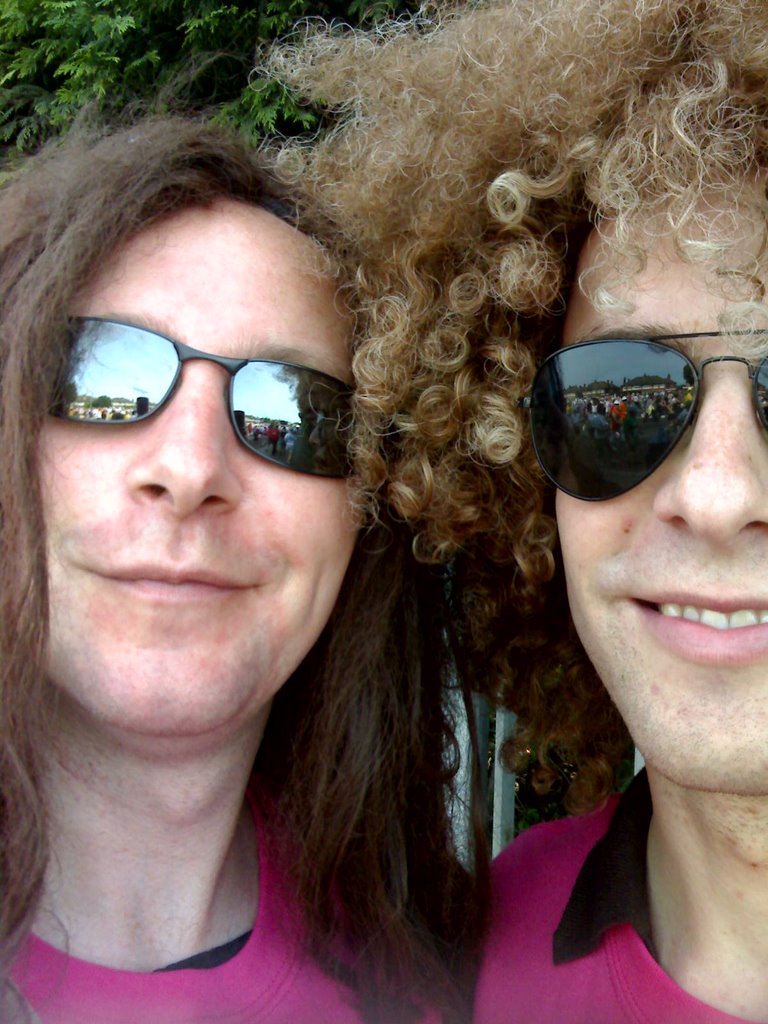

Myself and my friend Sean doing the Flora Women's Mini Marathon in aid of Our Ladies Hospice in Harold's Cross, Dublin on June 5th. Disturbingly, I received more compliments as a fake woman than I ever have as a real man...
Thursday, June 08, 2006
Nobody's at fault. Nobody's to blame. Nobody's responsible
No, that's not the forthcoming title of a biography of our Fianna Failure-Regressive Democrat coalition government but it would certainly be an apt one. A forthcoming report into the systemic communication failures that led to last week's constitutional crisis regarding our statutory rape laws is due to be published in a fortnight, and being an internal investigation, it's sure to be a whitewash of Hutton proportions.
As Bertie, McDowell et al scramble to deflect blame and re-establish their profoundly damaged credibilty, can we not, for once, allow them to continue rewriting the events of the last 10 days with a spin that makes them look like they were handling the crisis. Bertie Ahern went swanning off to the US to play the statesman after assuring the Dáil that there was no danger of any convicted sex offenders being released on foot of the Supreme Court ruling. When this proved damningly untrue last Tuesday, he remained abroad and didn't open his mouth on the subject until Thursday. In his place, we had the Tánaiste - the deputy Prime Minister of this country - speaking like a Joe Duffy caller in the Dáil, seemingly baffled and outraged at the situation as if there was nothing she could have or could do about it. Remember, she's the deputy prime minister of the country.
Then she and the Justice Minister gave wildly conflicting accounts of who knew what and when regarding the pivotal CC case that led to the abolition of the section of the 1935 act. All the while, the lack of preparedness for the crisis was never the responsibilty or fault of the Minister for Justice and Law Reform or the Attorney General Rory Brady. Faulting the government for the legal debale caused by the Supreme Court was never going to hold water. However, the political and governing response to it is purely the government's remit. But, as the crisis deepended last week, it became abundantly clear that Fianna Failure and its coalition partner were more concerned with salvaging their own reputations than actually finding solutions.
And where was the Taoiseach in all this? Presumably he was up in every tree in North Dublin trying to find out who was to blame for this mess. What did he find out? A senior official in the Attorney General's office is scapegoat apparently. Who this official is is anyone's guess. My own guess is that there is no official and that any independent analysis of last week's bungling would place the blame right at the door of the Attorney General himself, one of the Taoiseach's closest allies.
Why this conclusion cannot and will not be entertained by the Taoiseach is because Bertie remembers all too well the precedent established by his predecessor as leader of Fianna Fáil, Albert Reynolds. The AG sits at the cabinet table but is not a member of cabinet so lies outside the remit of collective responsibility. So who takes the flack when the AG messes up as gravely as this? Former AG Harry Whelehan bungled the extradition of paedophile priest Brendan Smyth in 1994, and amidst furious public (and intra-governmental) outrage, the Taoiseach fell on his sword and resigned, leading to the collapse of the Fianna Fáil-Labour Partnership government. The Taoiseach is the one responsible for the conduct of the Attorney General but will Bertie have to turn in his seal of office like Reynolds?
Of course not, because Bertie doesn't believe in demanding things like integrity, efficiency and honour from his cabinet, official appointees or himself. What a tremendous message this whole disaster sent to the impressionable minds of this country: you're never wrong no matter how much the facts indict you, never take responsibility for anything, never show respect for the people of your country, efficiency is a thing of the past, always find some anonymous scapegoat to save your own hide, put your own reputation and career above everything else and don't even think about doing the right thing. Such is the nature of politics in this country since his brand of short-term, visionless, bland, meaningless, non-commital, cowardly governing took hold. Yes, Bertie may be a great politician, but almost by definition, that means that he is an increasingly terrible leader.
As Bertie, McDowell et al scramble to deflect blame and re-establish their profoundly damaged credibilty, can we not, for once, allow them to continue rewriting the events of the last 10 days with a spin that makes them look like they were handling the crisis. Bertie Ahern went swanning off to the US to play the statesman after assuring the Dáil that there was no danger of any convicted sex offenders being released on foot of the Supreme Court ruling. When this proved damningly untrue last Tuesday, he remained abroad and didn't open his mouth on the subject until Thursday. In his place, we had the Tánaiste - the deputy Prime Minister of this country - speaking like a Joe Duffy caller in the Dáil, seemingly baffled and outraged at the situation as if there was nothing she could have or could do about it. Remember, she's the deputy prime minister of the country.
Then she and the Justice Minister gave wildly conflicting accounts of who knew what and when regarding the pivotal CC case that led to the abolition of the section of the 1935 act. All the while, the lack of preparedness for the crisis was never the responsibilty or fault of the Minister for Justice and Law Reform or the Attorney General Rory Brady. Faulting the government for the legal debale caused by the Supreme Court was never going to hold water. However, the political and governing response to it is purely the government's remit. But, as the crisis deepended last week, it became abundantly clear that Fianna Failure and its coalition partner were more concerned with salvaging their own reputations than actually finding solutions.
And where was the Taoiseach in all this? Presumably he was up in every tree in North Dublin trying to find out who was to blame for this mess. What did he find out? A senior official in the Attorney General's office is scapegoat apparently. Who this official is is anyone's guess. My own guess is that there is no official and that any independent analysis of last week's bungling would place the blame right at the door of the Attorney General himself, one of the Taoiseach's closest allies.
Why this conclusion cannot and will not be entertained by the Taoiseach is because Bertie remembers all too well the precedent established by his predecessor as leader of Fianna Fáil, Albert Reynolds. The AG sits at the cabinet table but is not a member of cabinet so lies outside the remit of collective responsibility. So who takes the flack when the AG messes up as gravely as this? Former AG Harry Whelehan bungled the extradition of paedophile priest Brendan Smyth in 1994, and amidst furious public (and intra-governmental) outrage, the Taoiseach fell on his sword and resigned, leading to the collapse of the Fianna Fáil-Labour Partnership government. The Taoiseach is the one responsible for the conduct of the Attorney General but will Bertie have to turn in his seal of office like Reynolds?
Of course not, because Bertie doesn't believe in demanding things like integrity, efficiency and honour from his cabinet, official appointees or himself. What a tremendous message this whole disaster sent to the impressionable minds of this country: you're never wrong no matter how much the facts indict you, never take responsibility for anything, never show respect for the people of your country, efficiency is a thing of the past, always find some anonymous scapegoat to save your own hide, put your own reputation and career above everything else and don't even think about doing the right thing. Such is the nature of politics in this country since his brand of short-term, visionless, bland, meaningless, non-commital, cowardly governing took hold. Yes, Bertie may be a great politician, but almost by definition, that means that he is an increasingly terrible leader.
Tuesday, June 06, 2006
It's an iPod's World

From The Irish Times on Saturday 3rd June.
iPod, Therefore I am: A Personal Journey Through Music by Dylan Jones Phoenix, £7.99
The iPod is one of the most recognisable and coveted cultural icons of the new century, whose devotees include everyone from Burt Bacharach to George W Bush. GQ editor Dylan Jones has credited his iPod with rejuvenating his passion for music, and that forms the basis of this hugely enjoyable memoir. Jones juxtaposes the history of Apple and the creation of the quasi-religious iPod industry with his own adolescent discovery of records and vinyl. The author hits just the right notes of humour and nostalgia in recreating the sights, sounds and trends of the 1970s and 1980s, as he takes us on a personal (and often painfully frank) trip through his youth, his career and the love of his life: music. Chock full of cultural history, gossip, celebrity anecdotes, this is an effortlessly entertaining treat. Declan Cashin
Thursday, June 01, 2006
Enough is Enough: It's time to go lads.

Just a quick question: exactly what do you have to do in order to get sacked from Bertie Ahern's cabinet? Seriously, I'd really like to know. What depths of incompetence, stupidity and arrogance need to be plumbed before the Taoiseach steps in and says 'this isn't good enough'? But he won't say that because we won't make him, no matter how grave the error - and do errors get any more grave than the rape law nightmare that's engulfed the government? The sick, dangerous inferiority complex that seems to be encoded in our culture has us convinced that we don't deserve better than the shambles that has passed for government in this country over the last number of days.
This government should resign en masse, and let the country adjudicate on who we want to protect the citizens of this state. Their authority, their credibility, and our already faltering trust in their ability to run the institutions of the state has been irrevocably shattered. There is no recourse left but for the Taoiseach to resign his party from the government as a demonstration that he acknowledges the severity of the constitutional, legal and political crisis that he and his cabinet just let happen on their watch. Anything else is just an insult to us.
Monday, May 29, 2006
This Is How It Is
I recently re-listened to this album. It says all I want to at the moment. The defining song of a generation?
Twentysomething, Jamie Callum
After years of expensive education
A car full of books and anticipation
I’m an expert on Shakespeare and that’s a hell of a lot
But the world don’t need scholars as much as I thought
Maybe I’ll go travelling for a year
Finding myself, or start a career
Could work the poor, though I’m hungry for fame
We all seem so different but we’re just the same
Maybe I’ll go to the gym, so I don’t get fat
Aren’t things more easy, with a tight six pack
Who knows the answers, who do you trust
I can’t even seperate love from lust
Maybe I’ll move back home and pay off my loans
Working nine to five, answering phones
But don’t make me live for Friday nights
Drinking eight pints and getting in fights
Maybe I’ll just fall in love
That could solve it all
Philosophers say that that’s enough
There surely must be more
Love ain’t the answer, nor is work
The truth elludes me so much it hurts
But I’m still having fun and I guess that’s the key
I’m a twentysomething and I’ll keep being me
Twentysomething, Jamie Callum
After years of expensive education
A car full of books and anticipation
I’m an expert on Shakespeare and that’s a hell of a lot
But the world don’t need scholars as much as I thought
Maybe I’ll go travelling for a year
Finding myself, or start a career
Could work the poor, though I’m hungry for fame
We all seem so different but we’re just the same
Maybe I’ll go to the gym, so I don’t get fat
Aren’t things more easy, with a tight six pack
Who knows the answers, who do you trust
I can’t even seperate love from lust
Maybe I’ll move back home and pay off my loans
Working nine to five, answering phones
But don’t make me live for Friday nights
Drinking eight pints and getting in fights
Maybe I’ll just fall in love
That could solve it all
Philosophers say that that’s enough
There surely must be more
Love ain’t the answer, nor is work
The truth elludes me so much it hurts
But I’m still having fun and I guess that’s the key
I’m a twentysomething and I’ll keep being me
Friday, May 26, 2006
The Church has its Priory-ties straight
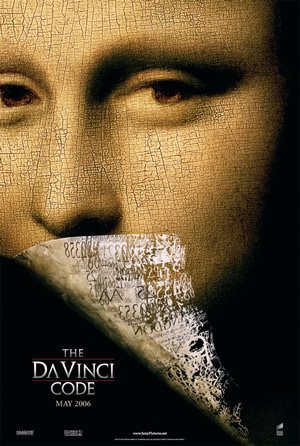
It was very interesting to receive a copy of a well-known Catholic publication on the way into a screening of The Da Vinci Code at theweekend, in which a 6 page article refuted all the claims made in the movie.
It got me wondering when the Catholic hierarchy will hand us out detailed articles that respond to the Ferns Report and other similar audits that catalogue the Church's catastrophic mishandling, and subsequent cover-up of, child sex abuse cases?
Thursday, May 25, 2006
Just Like A Woman
 Cate Blanchett to play Dylan in biopic
by Alfons LunaWed May 24, 5:47 PM ET
Cate Blanchett will play Bob Dylan in his "androgenous phase" in a new biopic of the great poet-songwriter's life, it was announced, as Dylan turned 65.
But even as he shows up everywhere in books, films and even a Broadway musical, Dylan, who has sought seclusion and mystery all his life, remains as enigmatic as ever.
Dylan has clearly shrugged off retirement age, taking on a new job as a radio DJ, publishing a selection of his memoirs, musing in a Martin Scorcese documentary, authorizing a stage musical with his songs -- and appearing in an advert for the Victoria's Secret lingerie store chain.
And on Dylan's birthday, the Hollywood press reported that Blanchett would be among several actors -- also including "Brokeback Mountain" star Heath Ledger and Richard Gere -- to portray the great American folksinger in a film.
Yet the exposure is adding as many layers to his mystery as it is giving fans more insight into the composer of classics such as "Like A Rolling Stone", "Blowin' in the Wind" and "The Times They Are A-Changin'".
Mystery surrounds the coming biographical film on Dylan by director Todd Haynes, who earlier took great liberties with the life of rock star David Bowie in his 1998 movie "Velvet Goldmine".
Now he is recruiting an all-star cast for his Dylan film "I'm Not There", in which six or seven actors will play the star to show different facets of his life and personality. Dylan has agreed to let Haynes film his biography.
But Dylan's penchant for hiding from publicity and attention has meant that all of the new biographical material, even his own book, have only made him more enigmatic.
A passage in his 2004 autobiography "Chronicles, Volume 1", explains his horrified reaction to fame and exaggerated image in the 1960s: when he was introduced at Princeton University as "the disturbed conscience of Young America", he said could only think, "Oh Sweet Jesus! ... I was so mad I wanted to bite myself."
When he found fans flocking to his Woodstock, New York home in the 1960s, he said, "I wanted to set fire to these people."
"Roadmaps to our homestead must have been posted in all fifty states for gangs of dropouts and druggies," he wrote.
Through the book Dylan refused to provide details on what many readers wanted to know about -- his 1966 motorcycle accident, his love affair with fellow folk star Joan Baez, his controversial move to "go electric".
Though tantalizing, Scorcese's documentary late last year was hardly more revealing about what Dylan himself thinks.
Still, there is more Dylan-mania to come. The Twyla Tharp musical "The Times They Are A-Changin'" will open this summer on Broadway. It is about a drunk named Captain Arab -- a character from a Dylan song -- whose traveling troupe sings out some of Dylan's greatest hits.
While on a tour of the United States, Dylan has also started hosting his own show of his favorite songs on XM, a US satellite radio network. Each week he plays an eclectic list of songs linked to a theme he has chosen, like Mother's Day or the climate.
Showing his broad tastes, in the first show, dedicated to the weather, he played Jimi Hendrix's "The Wind Cries Mary", Judy Garland singing "Come rain or Come Shine", and "Blow Wind Blow" by Frank Sinatra.
Some at first worried about how the show would sound since Dylan's mumbling and growling voice can be unintelligible at times.
"Yes, you can understand Dylan on radio better than you can in concert," wrote Chicago Sun-Times reviewer Dave Hoekstra.
"The show's main challenge will be to keep the music as fascinating as its host."
Wednesday, May 24, 2006
'United 93' is astonishing
 I attended an advanced screening of Paul Greengrass' controversial new movie 'United 93' last night and all I can say is that the early rave reviews from American critics are well deserved.
The action of the movie - which is performed by an unknown cast, some of whom play themselves in the aviation control centres - takes place in real time from when the plane took off from Boston on a beautiful, light Autumn morning and when it plunged into eternal darkness some hour and fifty mintues later. Greengrass keeps ratcheting up the tension, an extraordinary feat considering that everyone knows how this story ends.
It also serves as a searing indictment of George W Bush, simply by not mentioning him by name or using his image in the film. His absence from 'United 93' brilliantly metaphorises he and his government's catastrophic mishandling of events leading up to, and on, that terrible day.
The first hour documents how the controllers on the ground responded to the first wave of attacks on the World Trade Centre and the Pentagon, faithfully channeling the sense of absolute chaos that prevailed that morning.
Meanwhile, we become familiar with the passengers, crew and, crucially, the hijackers aboard flight 93 (One of the film's most powerful scenes juxtaposes the hostages and the hijackers repeatedly saying prayers that are central to their respective religions, but with obviously different meanings and intentions).
The final 25 minutes of the film should be enough to gaurantee Greengrass a place at next years' Oscars. You as the viewer become a passanger on that plane. You get swept up in the rising panic and desperation, as the hostages get in touch with loved ones on the ground, and, through distraught farewells, realise the fate that awaits them if they don't act.
A plan is hatched to take back the cockpit from the hijackers, and this forms the most suspenseful segment of the movie. My audience were cowered in their seats, chomping on nails, fists - anything - as the desperate situation unfolds before our eyes. When the final credits rolled, my audience were numb. It took a few moments for people to shake themselves, get up, go outside and return to their normal lives, struggling to cast off the devastating impact of this extraordinary, essential and profoundly moving film.
Friday, May 19, 2006
Homophobic bullying rife in schools, survey finds
Pretty depressing, but not at all surprising reading.
Homophobic bullying rife in schools, survey finds
19/05/2006
Homophobic bullying is a prevalent problem in second-level Irish schools, according to a report published today, writes Áine Kerr.
The survey of 364 teachers found almost 80 per cent were aware of instances of verbal bullying where homophobic terms were used. Some 16 per cent reported instances of physical bullying as a result of students perceiving someone to be homosexual.
Teachers involved in the social, personal and health education (SPHE) secondary school programme took part in the three-year study, entitled Straight Talk - Researching Gay and Lesbian Issues in the School Curriculum.
The DCU study funded by the Department of Education concludes that the Catholic Church's teachings are "very influential" on what is taught about relationships and sexuality.
It identifies the church as a significant contributor to "homophobic attitudes". Researchers noted that because the church owns most schools in Ireland, "nothing can be taught in a school that does not reflect the church's view on sexuality".
The report adds: "This situation has gone largely unchallenged, but, it is now clear that in relation to State policy in key areas of SPHE, a potential for conflict is beginning to emerge."
The study, by researchers in DCU's Centre for Educational Evaluation, found teachers feared improving homosexual education due to parental and staff disapproval and a lack of policy guidelines.
Researchers said 41 per cent of teachers found it more difficult to deal with homophobic bullying in their school than other types of bullying. Among the reasons for this were a desire to be sensitive to the victim, lack of guidelines, and a fear of the possible reaction from parents, other staff and students if they were seen to side with the student thought to be lesbian or gay.
Teachers in rural schools were more likely to cite the disapproval of their board of management as a hinderance to improving their work on lesbian and gay issues than their counterparts in urban schools.
"This may be related to the fact that the board of management of a school in a rural area will often include some members of the local clergy or religious personnel who will have a higher profile in the local community," the report states.
Only 10 per cent of schools include reference to homophobic bullying in their school policy on anti-bullying, the report notes.
Principal author James Norman, who undertook the research in conjunction with Miriam Galvin and Gerry McNamara, said that homophobic terms are almost an accepted language in second level schools.
"It is the last accepted prejudice existent in our schools. We have come to a point where we won't allow racist or sexist comments but we haven't been given a language for talking about homosexuality," said Mr Norman.
When teachers were asked if their school was going to attempt to extend its work on lesbian and gay issues, 57 per cent said they believed such a development would be "hindered".
In a list of concluding recommendations, the Department of Education is urged to issue clear guidelines to schools on their responsibility to address homophobic bullying among students and teachers.
It also advises that teachers should receive pre-service and in-service training aimed at promoting acceptance of sexual diversity among students. Boards of management are advised to produce policies in their schools that incorporate both the local school ethos and national equality legislation.
Guidelines on how to represent sexual diversity in SPHE must also be drawn up by the The National Council for Curriculum and Assessment (NCCA), the report says.
© The Irish Times
Homophobic bullying rife in schools, survey finds
19/05/2006
Homophobic bullying is a prevalent problem in second-level Irish schools, according to a report published today, writes Áine Kerr.
The survey of 364 teachers found almost 80 per cent were aware of instances of verbal bullying where homophobic terms were used. Some 16 per cent reported instances of physical bullying as a result of students perceiving someone to be homosexual.
Teachers involved in the social, personal and health education (SPHE) secondary school programme took part in the three-year study, entitled Straight Talk - Researching Gay and Lesbian Issues in the School Curriculum.
The DCU study funded by the Department of Education concludes that the Catholic Church's teachings are "very influential" on what is taught about relationships and sexuality.
It identifies the church as a significant contributor to "homophobic attitudes". Researchers noted that because the church owns most schools in Ireland, "nothing can be taught in a school that does not reflect the church's view on sexuality".
The report adds: "This situation has gone largely unchallenged, but, it is now clear that in relation to State policy in key areas of SPHE, a potential for conflict is beginning to emerge."
The study, by researchers in DCU's Centre for Educational Evaluation, found teachers feared improving homosexual education due to parental and staff disapproval and a lack of policy guidelines.
Researchers said 41 per cent of teachers found it more difficult to deal with homophobic bullying in their school than other types of bullying. Among the reasons for this were a desire to be sensitive to the victim, lack of guidelines, and a fear of the possible reaction from parents, other staff and students if they were seen to side with the student thought to be lesbian or gay.
Teachers in rural schools were more likely to cite the disapproval of their board of management as a hinderance to improving their work on lesbian and gay issues than their counterparts in urban schools.
"This may be related to the fact that the board of management of a school in a rural area will often include some members of the local clergy or religious personnel who will have a higher profile in the local community," the report states.
Only 10 per cent of schools include reference to homophobic bullying in their school policy on anti-bullying, the report notes.
Principal author James Norman, who undertook the research in conjunction with Miriam Galvin and Gerry McNamara, said that homophobic terms are almost an accepted language in second level schools.
"It is the last accepted prejudice existent in our schools. We have come to a point where we won't allow racist or sexist comments but we haven't been given a language for talking about homosexuality," said Mr Norman.
When teachers were asked if their school was going to attempt to extend its work on lesbian and gay issues, 57 per cent said they believed such a development would be "hindered".
In a list of concluding recommendations, the Department of Education is urged to issue clear guidelines to schools on their responsibility to address homophobic bullying among students and teachers.
It also advises that teachers should receive pre-service and in-service training aimed at promoting acceptance of sexual diversity among students. Boards of management are advised to produce policies in their schools that incorporate both the local school ethos and national equality legislation.
Guidelines on how to represent sexual diversity in SPHE must also be drawn up by the The National Council for Curriculum and Assessment (NCCA), the report says.
© The Irish Times
Subscribe to:
Posts (Atom)